
The Pioneer DJ VM-50 is a 5-inch bi-amplified active monitor designed for DJ practice, home studios and compact production setups. It uses Class-D amplification with 96 kHz DSP, a 5.25-inch aramid-fibre woofer, adjustable low and high EQ settings and balanced XLR/TRS plus RCA inputs.
VM-50 key features
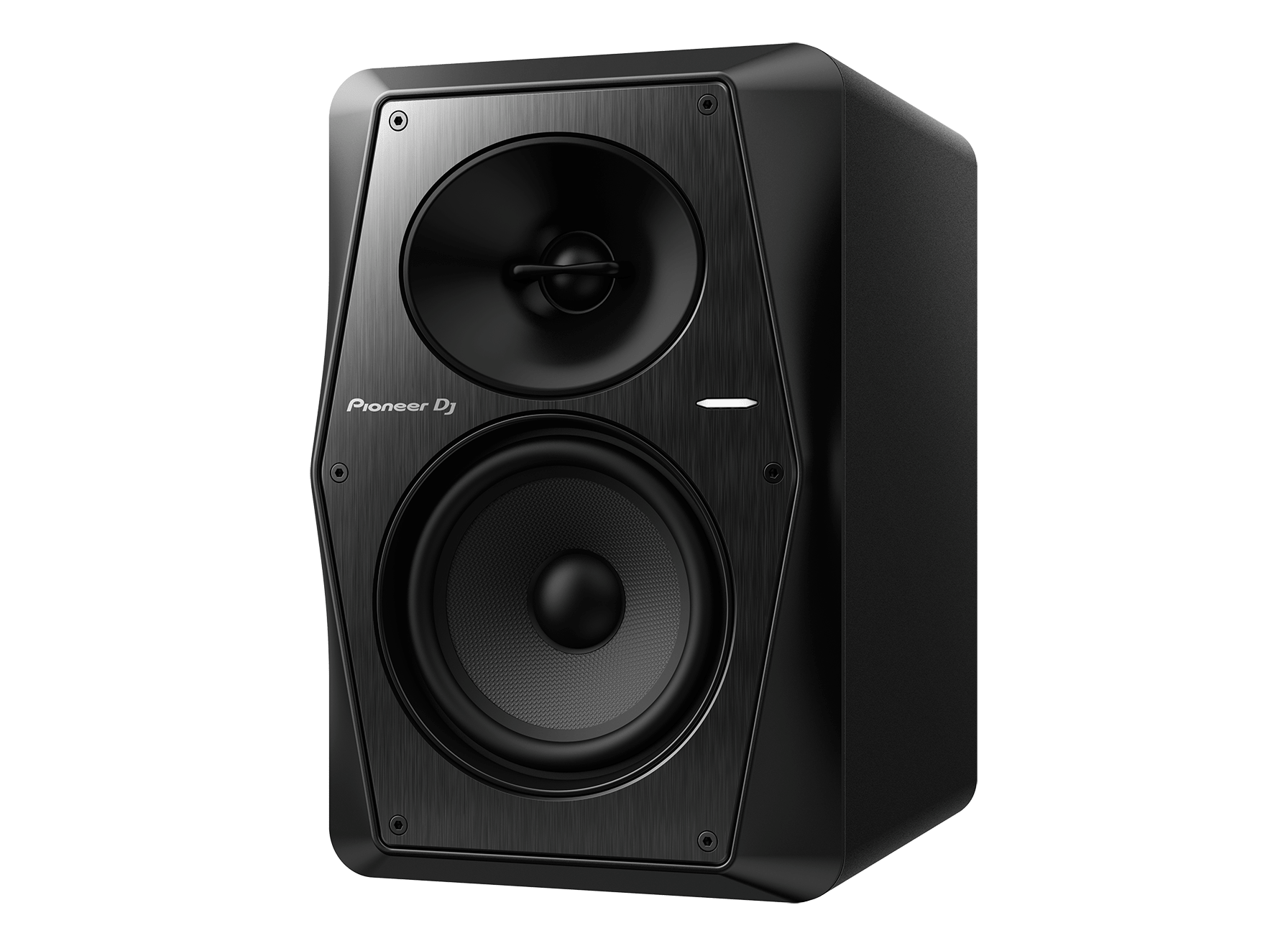
- 5.25-inch aramid-cone woofer.
- Class-D bi-amplification.
- 30 W LF + 30 W HF output.
- 96 kHz DSP.
- 40 Hz – 36 kHz frequency range.
- 107 dB maximum sound pressure.
- XLR, TRS and RCA inputs.
- Low and high EQ adjustment.
- Hexagonal aluminium front baffle.
Sound and amplification
The VM-50 uses separate Class-D amplifier channels for the woofer and tweeter, delivering 30 W to each section. The 96 kHz DSP manages crossover and voicing while keeping the cabinet compact.
Room EQ controls
Rear-panel low and high EQ controls provide several preset combinations for adapting the speaker to different rooms, desk positions and listening preferences. This is useful when the monitors must sit close to a wall or in a room with strong bass build-up.
Inputs
Balanced XLR and TRS inputs allow connection to professional mixers and audio interfaces, while RCA makes the VM-50 easy to integrate with home DJ equipment.
VM-50 strengths
- Compact size.
- Balanced and unbalanced inputs.
- Useful room-EQ flexibility.
- Wide published frequency range.
- Suitable for both DJ practice and production.
VM-50 limitations
- Less low-end extension and headroom than VM-70 or VM-80.
- Sold as individual speakers rather than a stereo pair.
- No Bluetooth.
Pioneer DJ VM-50 full specifications
- Woofer: 133 mm / 5.25-inch aramid cone.
- Dimensions: 198 × 256 × 300 mm.
- Weight: 5.5 kg.
- Frequency range: 40 Hz – 36 kHz.
- Maximum SPL: 107 dB.
- LF amplifier: 30 W.
- HF amplifier: 30 W.
- Inputs: XLR, TRS and RCA.
Overall view
The VM-50 is the most compact model in the VM range and suits smaller rooms where an 8-inch monitor would be excessive. Its strongest advantage is the combination of professional connections and flexible EQ in a relatively small cabinet.
Leave a Reply